
Choosing a bandage supplier can feel simple until product quality affects real patient care. A Bandage Manufacturer does more than cut fabric, add adhesive, and pack boxes. It manages material selection, production controls, sterilization processes, labeling, testing, and supply consistency. These details matter when a dressing must stay secure on moving skin or protect a small wound from contamination.
A professional manufacturer should explain its experience clearly. Ask how it selects cotton, nonwoven fabric, adhesive, backing film, and packaging materials. Request evidence of quality systems, product testing, batch traceability, and appropriate regulatory compliance for your target market. Reliable companies can usually provide samples, technical documents, inspection records, and clear answers about production capacity. Look closely at the sample. Check its softness, edge finish, absorbency, adhesion, removal comfort, and package seal. Small defects often reveal larger process weaknesses.
Price still matters, but it should not dominate the decision. A low quotation may hide inconsistent materials, weak documentation, or delayed delivery. That is not always true, but it deserves careful questioning. Visit the facility when possible, or arrange a live factory audit through an independent specialist. Discuss minimum order quantities, customization, lead times, complaint handling, and corrective actions before signing an agreement. A dependable partner welcomes practical questions. Vague promises are less useful than measurable evidence. Choosing well takes patience, and even experienced buyers can overlook one important detail. That is why a structured comparison remains valuable.
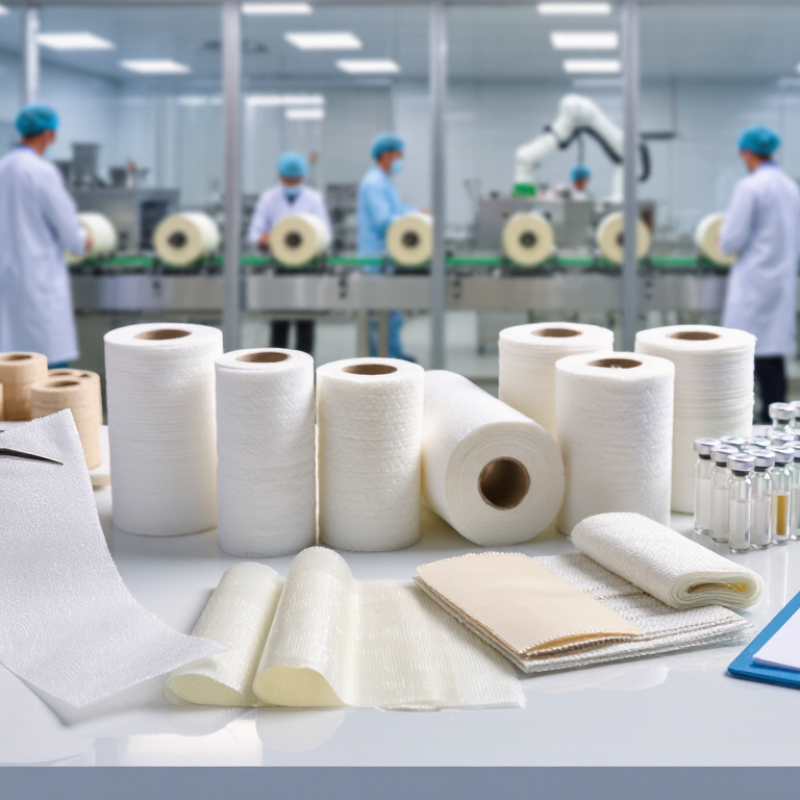
A bandage manufacturer is a company that designs, produces, tests, and packages wound-care products. It may make adhesive strips, gauze pads, cohesive wraps, or specialized dressings. It is more than gauze. The manufacturer selects materials, controls production conditions, and records each batch. Its work affects comfort, protection, and safe wound management.
Experienced manufacturers study how bandages perform on moving skin, damp surfaces, and sensitive areas. They test adhesion, absorbency, flexibility, packaging strength, and cleanliness. Sterile products require controlled environments and validated processes. Non-sterile products still need consistent handling and accurate labeling. Clear batch records support traceability when a quality question appears. Small details matter, such as rounded edges, smooth backing, and easy opening without tearing the dressing.
A dependable manufacturer also uses trained quality staff and documented inspection procedures. Ask whether it can provide material specifications, test reports, production samples, and relevant compliance documentation. Factory experience is useful, but it should not replace evidence. No factory gets every detail right. A manufacturer that investigates defects openly may be more trustworthy than one making perfect-sounding claims. Communication matters too. It should explain minimum order quantities, lead times, customization limits, and storage conditions in plain language. That difference matters.
A bandage manufacturer develops, converts, sterilizes, tests, packages, and supplies products such as adhesive strips, gauze dressings, wound pads, and elastic bandages. The chart below presents a practical example of how purchasing teams can prioritize key evaluation criteria when comparing manufacturers.
The percentages are an example procurement framework rather than market-share statistics. Buyers should confirm applicable medical-device regulations, ISO 13485 quality-system certification, biocompatibility evidence, sterilization validation, product testing, traceability, and supply capacity before placing an order.
A bandage manufacturer produces more than adhesive strips. Its range may include sterile gauze, nonwoven swabs, elastic wraps, cohesive bandages, hydrocolloid dressings, foam pads, and compression products. According to the World Health Organization’s Global Status Report on Road Safety 2023, road crashes cause 20–50 million nonfatal injuries each year. Many wounds require dependable protection, absorbency, or controlled compression. Small details matter, such as smooth edges, easy-tear packaging, and adhesive that stays secure without irritating skin.
Manufacturers also provide material selection, product design, cutting, coating, sterilization, and sealed packaging. Some support private-label production, sample development, artwork preparation, quality testing, and technical documentation. Grand View Research estimated the global advanced wound care market at approximately USD 11.6 billion in 2023. This growth increases demand for specialized dressings, but higher demand does not automatically mean better quality. A supplier should show batch records, test methods, sterility evidence, and traceable raw-material controls.
In practical sourcing, I would compare samples under realistic conditions. Apply a dressing to clean, dry skin, then check comfort after movement and removal. Ask about minimum order quantities, production lead times, storage limits, and complaint handling. A low unit price can conceal weak packaging or inconsistent absorbency. No manufacturer gets every variable right. The useful question is whether the supplier measures failures, explains them clearly, and improves the next production batch.
A bandage manufacturer converts medical materials into dependable wound-care products. A reliable operation begins with clear product specifications, including size, absorbency, adhesion, packaging, and intended use. Materials such as fabric, nonwoven pads, adhesive, release liners, and packaging film require documented incoming inspections. Staff should check dimensions, cleanliness, surface condition, and batch information before production starts. Small inconsistencies can affect comfort and performance.
The manufacturing process is usually organized into controlled stages. Materials are unwound, cut, shaped, and assembled according to approved instructions. Adhesive application needs careful control because excess adhesive may irritate skin, while too little may reduce attachment. Operators monitor temperature, coating weight, cutting accuracy, and machine speed. Samples are taken during production, not only at the end. Packaging follows assembly, with labels, lot numbers, and expiry information checked against production records. Sterile products require additional validated processing and sealed packaging.
Quality assurance connects every stage. A responsible manufacturer keeps traceability records from raw materials to finished cartons. Testing may cover adhesion, absorbency, seal strength, appearance, and microbial control when applicable. Independent audits and trained personnel add useful protection, but paperwork alone proves little. Ask how deviations are handled, how samples are retained, and whether equipment is regularly calibrated. One weakness deserves attention: even a clean facility can produce inconsistent results if workers rush inspections. The best choice is a manufacturer that explains its controls clearly and accepts reasonable questions.
A reliable bandage manufacturer should operate under a documented quality management system, such as ISO 13485. This system controls materials, production steps, testing, and customer complaints. It should also meet applicable medical device requirements in each target market. Certificates matter, but current certificates matter more.
Material safety deserves close attention. Manufacturers should provide biocompatibility evidence for adhesives, backing fabrics, absorbent pads, and protective liners. Relevant testing may follow ISO 10993 principles. Sterile products need validated sterilization processes, such as radiation or ethylene oxide methods. Packaging should protect sterility until use. Check seal strength, aging data, and transport testing.
Ask for batch traceability. Each carton should connect to production records, inspection results, and raw material information. During a factory visit, examine clean work areas, calibration labels, and sampling procedures. A strong manufacturer can explain what happens after a failed inspection. That answer reveals practical experience.
Do not rely on certificates alone. Some documents may be outdated, incomplete, or poorly understood. Request recent audit reports, product specifications, test reports, and corrective action records. Review sample bandages under realistic conditions, including sweat, movement, and repeated handling. A supplier may perform well in the laboratory but disappoint during daily use. That possibility deserves honest testing.
How Can You Choose the Right Bandage Manufacturer?
Choosing a bandage manufacturer requires more than comparing unit prices. The global wound care market exceeded US$20 billion in 2023, according to Grand View Research’s 2024 market report. That scale attracts many suppliers, but capacity does not guarantee dependable quality. Ask for ISO 13485 certification, recent audit records, and documented production controls. Check whether the factory can trace cotton, adhesive, packaging, and sterilization batches. Traceability matters.
Product performance should match the intended clinical use. Examine absorbency, adhesion, skin comfort, breathability, and package integrity. Request samples from different production lots, not one perfect sample. Test them after storage and transport. A bandage that peels from sweaty skin is not reliable, even if it looks excellent in a showroom. For sterile products, review sterilization validation and barrier testing. Relevant evidence may include ISO 11135, ISO 11137, and biocompatibility assessments under ISO 10993.
Communication is another practical test. A capable manufacturer should explain lead times, minimum order quantities, complaint handling, and change-control procedures clearly. The World Health Organization reports that one in ten patients experiences harm in healthcare, with more than half considered preventable. Supplier controls cannot solve every clinical risk, but weak documentation can increase it. Do not accept vague certificates or unchanged answers. No checklist is perfect. Reassess the supplier after delivery, especially when packaging, materials, or production sites change.
| Evaluation Dimension | What a Reliable Manufacturer Should Provide | Common Industry Reference or Range | Why It Matters | Recommended Verification |
|---|---|---|---|---|
| Manufacturer Type | Direct factory with documented production, quality-control, and traceability processes | Manufacturer, contract manufacturer, or trading company | Direct production access usually improves technical communication and batch traceability | Request a manufacturing-flow diagram, facility audit, and production photographs |
| Product Category | Capability to produce the required format, such as adhesive strips, gauze pads, cohesive bandages, or elastic bandages | Nonwoven, woven, cotton, elastic, hydrocolloid, or other wound-care constructions | Different applications require different absorbency, flexibility, adhesion, and breathability | Compare product specifications, samples, and intended-use statements |
| Quality Management System | A documented medical-device quality system with controlled procedures and corrective-action records | ISO 13485 is the widely recognized quality-management standard for medical devices | A formal system supports consistent manufacturing, complaint handling, and process control | Check certificate scope, validity, issuing body, and covered production site |
| Regulatory Documentation | Technical specifications, risk-management files, declarations, test reports, and labeling support where applicable | Documentation depends on product classification and destination market | Incomplete documentation can delay registration, importation, or customer approval | Provide the target market and request a document checklist before placing an order |
| Material Safety | Material declarations and evidence of biocompatibility or skin-contact safety appropriate to the product | Common checks include cytotoxicity, irritation, sensitization, and adhesive-skin compatibility | Skin-contact products may cause irritation if materials, adhesives, or inks are unsuitable | Review current laboratory reports and confirm that tests cover the final product |
| Sterilization Capability | Validated sterilization process or controlled supply-chain management for sterile products | Ethylene oxide, gamma irradiation, or steam may be used depending on product materials | Incorrect sterilization can affect product safety, packaging integrity, and shelf life | Request sterilization validation, residual limits, and sterility test records where relevant |
| Adhesive Performance | Consistent peel adhesion, holding power, repositionability, and clean removal appropriate to the intended use | Performance varies with adhesive chemistry, backing material, skin type, temperature, and humidity | Adhesion that is too weak may cause detachment; excessive adhesion may damage skin | Conduct application, wear-time, removal, and accelerated-aging tests using production samples |
| Packaging and Shelf Life | Protective packaging, lot coding, expiry-date control, and shipping validation | Shelf life is product-specific and must be supported by stability data | Packaging protects cleanliness, sterility, adhesion, and product identity during distribution | Check package-seal testing, transport simulation, storage conditions, and date coding |
| Customization Capability | Support for dimensions, materials, colors, printing, packaging formats, and private-label artwork | Customization normally increases tooling, artwork, testing, and approval requirements | A capable partner can align the product with clinical, retail, or institutional requirements | Ask for a sample approval process, artwork requirements, and change-control procedure |
| Minimum Order Quantity | A clearly stated minimum order for standard and customized products | MOQ varies significantly by material, packaging, printing, and production setup | The MOQ affects inventory investment, cash flow, and launch risk | Obtain written MOQ, price breaks, sample policy, and re-order conditions |
| Lead Time | Separate timelines for sampling, artwork approval, raw-material preparation, production, and inspection | Lead time depends on product complexity, order size, materials, and regulatory release requirements | Reliable scheduling reduces stockout risk and improves launch planning | Request a milestone schedule and confirm how delays are communicated |
| Batch Traceability | Lot numbers linked to raw materials, production records, inspection results, and shipment records | Traceability should cover every production batch and relevant packaging component | Traceability enables targeted investigations, recalls, and corrective actions | Request a redacted batch record and sample certificate of analysis |
| Total Cost and Service | Transparent pricing that includes product, packaging, testing, tooling, freight terms, and after-sales support | The lowest unit price may not represent the lowest total cost of ownership | Quality failures, delays, compliance gaps, and high minimum orders can increase the actual cost | Compare at least three written quotations using the same specification and delivery terms |
