How to Choose Medical Paper Towels for Global Buyers
Choosing Medical Paper Towels for global distribution requires more than comparing prices or sheet counts. Buyers should examine absorbency, wet strength, softness, lint release, and material consistency. A towel that feels suitable in a showroom may tear beside a sink or leave fibers on stainless steel surfaces. Small details matter.
Start with the intended environment. Examination rooms, laboratories, dental clinics, and hospital washrooms may require different towel structures. Two-ply products often offer better strength, while recycled fibers may support sustainability goals. However, recycled content can affect softness, color, and lint performance. The trade-off is real.
Packaging also deserves close attention. Individual wrapping can improve hygiene protection during transport, while sealed cartons help prevent moisture damage. Buyers should request samples from several production batches, not only one attractive sample. Check the towel after wetting, pulling, folding, and dispensing. Test it under ordinary working conditions.
Reliable suppliers should provide clear product specifications, batch identification, material information, and quality-control records. Certifications may support confidence, but buyers must verify their scope, validity, and relevance to the target market. Local healthcare, labeling, packaging, and environmental requirements can differ significantly. Do not assume one certificate works everywhere.
Supplier communication is another practical test. Can the manufacturer explain pulp sources, production tolerances, lead times, and complaint handling? Can they maintain quality during a large order? A low quotation is not always economical. Weak cartons, inconsistent rolls, or delayed documentation can create hidden costs. No single towel fits every facility. Careful sampling, documented evaluation, and periodic supplier reviews create a more dependable purchasing decision.
What Medical Paper Towels Are and Where They Are Used
Medical paper towels are disposable absorbent sheets designed for hygiene tasks in healthcare settings. They are commonly made from cellulose fibers, with one or more layers for strength and absorption. Many have embossed surfaces that improve liquid pickup and reduce slipping. However, “medical” does not automatically mean sterile. Sterility must be stated and supported by appropriate documentation. That distinction matters. These towels are intended for drying, protecting surfaces, or handling routine spills, not for covering open wounds.
They are used in examination rooms, dental practices, laboratories, outpatient clinics, and treatment areas. Staff may place a towel beneath instruments during a procedure or use it after handwashing. Dental teams often need sheets that resist tearing when exposed to water. Laboratories may prefer low-lint towels near samples and equipment. Clinics also use them to wipe tables between patients, according to their cleaning procedures. In busy wards, weak paper can leave wet fragments behind. That creates extra work. A common purchasing mistake is choosing softness alone. Soft paper may feel pleasant but fail under pressure.
For global buyers, evaluation should begin with ply, basis weight, absorbency, wet strength, and lint performance. Ask for test data and clear material specifications. Packaging deserves attention too. Sealed packs help protect unused towels during transport and storage. Check dimensions, sheet count, carton strength, and production dates. Local healthcare rules may require specific labeling or documentation. A practical trial is more reliable than a catalog description. Use the same water volume and test drying time. Small tests reveal weaknesses quickly. What works in a dry clinic may perform poorly in a humid warehouse.
Which Safety and Hygiene Standards Global Buyers Should Check
When selecting medical paper towels, safety claims should be tested, not accepted from a sales sheet. Ask for material specifications, batch traceability, and recent laboratory reports. Check absorbency, wet strength, lint release, and skin-contact safety under intended conditions. A towel that feels soft may shed fibers when soaked. That detail matters near wounds, instruments, and clean work surfaces. Good purchasing decisions begin with the actual use environment.
For facilities in Europe, review applicable chemical restrictions under REACH and confirm whether food-contact rules apply. In the United States, request evidence supporting relevant FDA requirements when skin, food, or medical use is claimed. Do not treat CE marking as universal paper-towel approval. It may not apply to this product. If the towel is marketed as sterile, verify the sterilization method, package integrity, and validated shelf life. Otherwise, do not assume sterility. ISO 13485 certification may indicate stronger process control, but it does not prove every roll is safe.
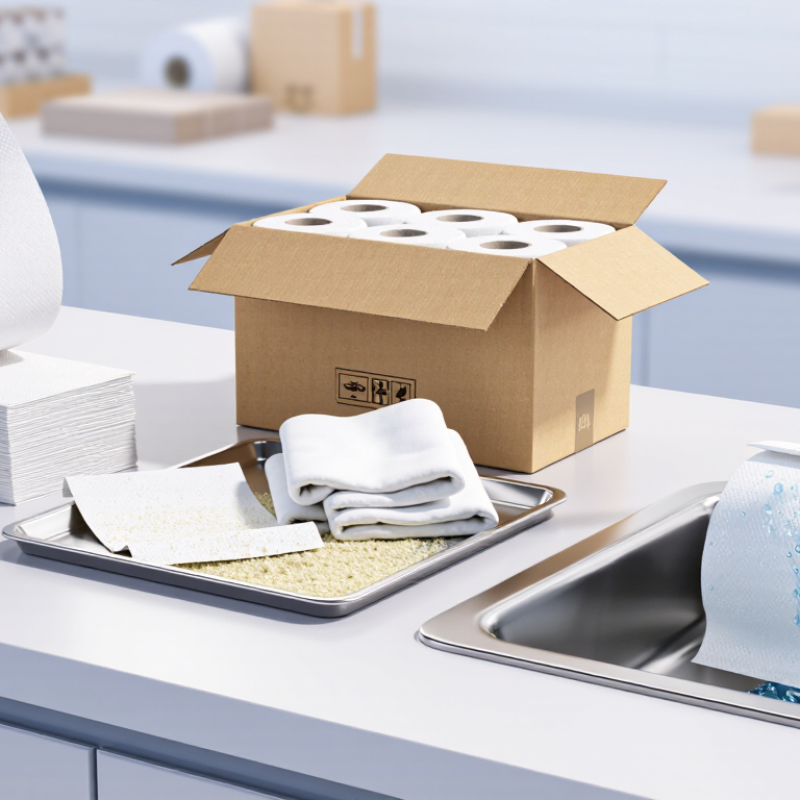
Ask for testing based on recognized methods, including ISO 10993 biocompatibility evaluations when prolonged skin contact is expected. Requirements differ by country, so local regulatory review remains necessary. I would also inspect samples after repeated wet handling. Rub a damp towel over a dark tray and look for visible lint. It is not laboratory testing. It reveals weaknesses. Record lot numbers, storage conditions, moisture barriers, and complaint procedures. A cheaper carton can become expensive through contamination, waste, or replacement delays. Some specifications remain imperfect, and suppliers may not test every risk in your facility. Ask better questions before signing.
How to Choose Medical Paper Towels for Global Buyers
Safety and hygiene standards global buyers should check before approving a medical paper towel supplier.
Publication dates help buyers identify the relevant edition of each reference document. ISO 9073-6 and ISO 9073-10 are useful for checking absorption performance, lint and particle release in nonwoven materials. ISO 13485 evaluates the manufacturer’s medical-device quality management system, while ISO 11607-1 applies when products are supplied in packaging intended to maintain sterility. EN 13795-1 and ISO 14644-1 should be checked when towels are used in surgical or controlled cleanroom environments. Always confirm the latest edition and applicability with the testing laboratory or regulatory authority in the destination market.
How to Choose the Right Size, Ply, Packaging, and Dispenser Fit
How to Choose Medical Paper Towels for Global Buyers
For global buyers, paper towel selection should begin with the cleaning task and user movement. A compact towel suits narrow sinks and controlled dispensing areas. Larger sheets provide better hand coverage in busy clinical spaces. Measure the folded and unfolded dimensions carefully. A few millimeters can affect loading, pulling, and waste.
Ply influences strength, softness, absorbency, and storage volume. Single-ply towels may suit light hand drying, while two-ply options handle heavier moisture. More plies are not automatically better. Extra thickness can increase refill frequency and shipping costs. Test towels with wet hands, not only from a dry sample. That simple step is often missed.
Packaging also affects hygiene and handling. Individually protected packs can support cleaner storage during long-distance transport. Bulk packs usually reduce material and freight costs, but they need a dry, organized stockroom. Check carton dimensions before ordering. Dispenser compatibility deserves equal attention. Measure the opening, depth, mounting space, and towel-fold style. Then test one complete pull. A smooth feed matters. Do not trust product dimensions alone. In practical evaluations, tightly packed towels sometimes resist the first pull. That creates unnecessary touching and delays. No checklist replaces a real trial. Document the results, including damaged sheets, refill time, and waste after several busy shifts. Small differences matter.